Recordings often feature a taraf ensemble, including the violin, cobza (lute), and accordion .
is a cornerstone of Romanian urban folklore, performed by the legendary Zavaidoc (born Marin Teodorescu, 1896–1945). The song is a premier example of muzică lăutărească , a genre of traditional music performed by professional musicians known as lăutari . The Artist: Zavaidoc
The title translates roughly to "Giddy-up, giddy-up, my dark-bay horse." In Romanian folklore, the "murg" (dark-bay horse) is a recurring symbol of a man’s faithful companion, often carrying him toward a lover or through hardship. The lyrics typically evoke themes of journeying, longing, and vitality . Musical Characteristics:
Known as one of the first "stars" of the Romanian popular song, Zavaidoc rose to fame in the . His stage name, meaning "the cheerful one" or "the one who causes a stir," reflected his vibrant performance style. He was a frequent performer in the bohemian cafes of Bucharest, often collaborating with labels like Columbia Records to record his vast repertoire. Song Analysis: "Di, di, di murgule di"
The song belongs to the urban lăutărească tradition, which blends regional folk elements with the sophisticated "café-concert" atmosphere of interwar Bucharest.
It is a rhythmic, spirited piece designed for entertainment and social gatherings.
Zavaidoc was celebrated for his clear, powerful tenor voice and his ability to infuse traditional melodies with the theatricality of the era. Cultural Legacy
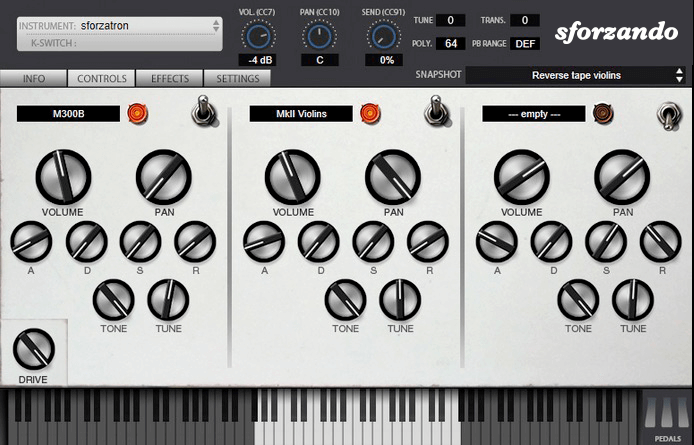
The SFZ Format is widely accepted as the open standard to define the behavior of a musical instrument from a bare set of sound recordings. Being a royalty-free format, any developer can create, use and distribute SFZ files and players for either free or commercial purposes. So when looking for flexibility and portability, SFZ is the obvious choice. That’s why it’s the default instrument file format used in the ARIA Engine.
OEM developers and sample providers are offering a range of commercial and free sound banks dedicated to sforzando. Go check them out! And watch that space often, there’s always more to come! You are a developer and want to make a product for sforzando? Contact us!
You can also drop SF2, DLS and acidized WAV files directly on the interface, and they will automatically get converted to SFZ 2.0, which you can then edit and tweak to your liking!
Download for freeInstrument BanksSupport
Recordings often feature a taraf ensemble, including the violin, cobza (lute), and accordion .
is a cornerstone of Romanian urban folklore, performed by the legendary Zavaidoc (born Marin Teodorescu, 1896–1945). The song is a premier example of muzică lăutărească , a genre of traditional music performed by professional musicians known as lăutari . The Artist: Zavaidoc Zavaidoc - Di, di, di murgule di
The title translates roughly to "Giddy-up, giddy-up, my dark-bay horse." In Romanian folklore, the "murg" (dark-bay horse) is a recurring symbol of a man’s faithful companion, often carrying him toward a lover or through hardship. The lyrics typically evoke themes of journeying, longing, and vitality . Musical Characteristics: Recordings often feature a taraf ensemble, including the
Known as one of the first "stars" of the Romanian popular song, Zavaidoc rose to fame in the . His stage name, meaning "the cheerful one" or "the one who causes a stir," reflected his vibrant performance style. He was a frequent performer in the bohemian cafes of Bucharest, often collaborating with labels like Columbia Records to record his vast repertoire. Song Analysis: "Di, di, di murgule di" The Artist: Zavaidoc The title translates roughly to
The song belongs to the urban lăutărească tradition, which blends regional folk elements with the sophisticated "café-concert" atmosphere of interwar Bucharest.
It is a rhythmic, spirited piece designed for entertainment and social gatherings.
Zavaidoc was celebrated for his clear, powerful tenor voice and his ability to infuse traditional melodies with the theatricality of the era. Cultural Legacy