
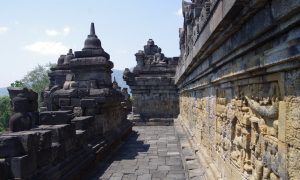
The materiality of writing has major implications for the practice of history...When you look at a ‘medieval’ Javanese manuscript, it is almost always an 18th or 19th century copy of a copy of a copy ... and so on.
The Five — Dharma Types: Vedic Wisdom For Discove...
Driven by protection, justice, and order. Warriors are natural leaders, athletes, and protectors who thrive on challenge and discipline.
Motivated by knowledge, truth, and sharing wisdom. Educators are the teachers, researchers, and counselors of society, prioritizing intellectual and spiritual growth. The Five Dharma Types: Vedic Wisdom for Discove...
By identifying one's Dharma Type, an individual can stop fighting against their natural inclinations and start leaning into their strengths. This ancient system provides a compass for navigating modern life, suggesting that true success is not found in universal standards, but in the authentic expression of one's unique Vedic nature. Driven by protection, justice, and order
The core philosophy suggests that everyone is born with a dominant "Dharma Type" that dictates their strengths, weaknesses, and path to fulfillment. Unlike rigid social hierarchies, modern Vedic wisdom views these types as internal blueprints. When a person aligns their career and lifestyle with their inherent type, they experience dharma —right action or living in harmony with the universe. Conversely, "Adharma" occurs when one tries to live out a type that does not belong to them, leading to burnout and dissatisfaction. Conclusion Educators are the teachers, researchers, and counselors of
The Five Dharma Types, a concept rooted in Vedic wisdom and popularized by educator Simon Chokoisky, offers a framework for understanding one's true nature and purpose. Drawing from the ancient Indian social structure ( varna ), these types—Warrior, Educator, Merchant, Laborer, and Outsider—categorize human personality into archetypes that define how an individual interacts with the world. The Five Archetypes
Rooted in service, craftsmanship, and physical manifestation. Laborers find fulfillment in the "doing"—building, creating, and supporting the foundations of society through tangible work.