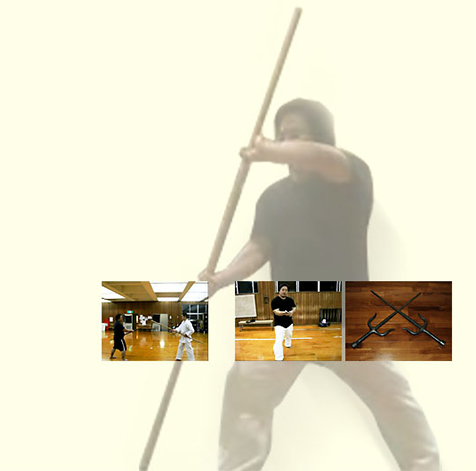
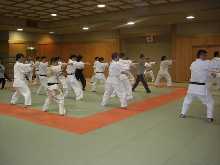
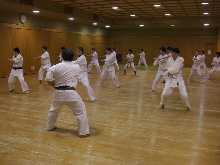
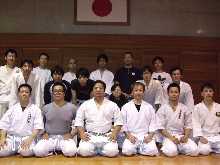
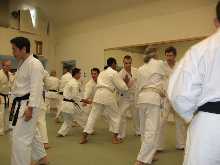
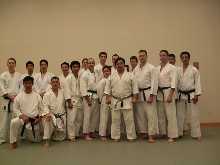
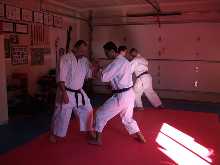
Okinawa-kenpo is a karate style which has been developed based on ancient Okinawan martial arts called "Ti". Its technique and thought were studied and refined by a Tomari-te master, Shinkichi Kuniyoshi (also known as "BUSHI" Kuniyoshi) and passed down to Grand Master Shigeru Nakamura, the founder of Okinawa-kenpo. Grand Master Nakamura opened his own dojo "Okinawa-kenpo Karate-do Shurenjo" at Onaka, Nago city and taught his art of karate.
Written in Japanese.
Japanese fonts required to view this contents
Letter from Africa: Culture clash over Nigeria's rival alphabets
The lettering states the note's currency value. He also wants the army to stop using the Arabic inscription: "Victory is from God"
EXPLAINER: What is this 'Arabic sign' on the naira all about?
The writing on Nigerian Naira notes is not Arabic, but rather the Ajami script, a system using Arabic letters to write local languages like Hausa, intended to indicate denominations to literate users. Contrary to claims of "Islamization," the Central Bank of Nigeria maintains the script is a secular, historical, and cultural feature intended to facilitate financial inclusion. For a detailed explanation of the script's origin, read this report from BBC .
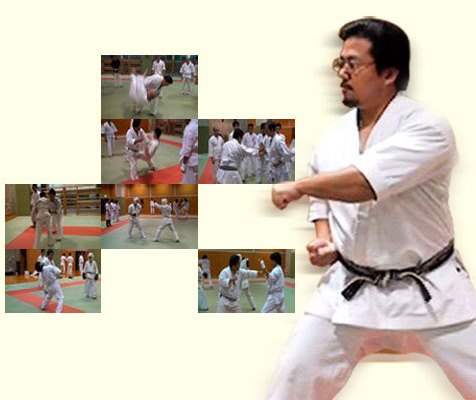
Old style karate techniques and training methods still remain in our system. We train with those methods, which are rarely seen in other Ryuha these days.
Tanren-hou (Training method)
Okinawa-sumo (traditional Okinawan wrestling)
Torite (grabbing)
Buki-jutsu (weapons)
Our techniques, from empty hands to weapons,are incorporated in a coherent system and consist of common basic skills.
Historically, Okinawa-kenpo inherited various Kata.
The following is a list of kata which are practiced at Okinawa-kenpo Karate-do, Oki-ken-kai
Karate
Weapons
Letter from Africa: Culture clash over Nigeria's rival alphabets
The lettering states the note's currency value. He also wants the army to stop using the Arabic inscription: "Victory is from God"
EXPLAINER: What is this 'Arabic sign' on the naira all about?
The writing on Nigerian Naira notes is not Arabic, but rather the Ajami script, a system using Arabic letters to write local languages like Hausa, intended to indicate denominations to literate users. Contrary to claims of "Islamization," the Central Bank of Nigeria maintains the script is a secular, historical, and cultural feature intended to facilitate financial inclusion. For a detailed explanation of the script's origin, read this report from BBC .
We, Okinawa-kenpo Karate-do Oki-Ken-Kai, work on in a unit called "Keiko-kai".
is a group of like-minded people to practice Okinawa-kenpo any time and anywhere.
Today, there are Keiko-kai in eight region Japan;
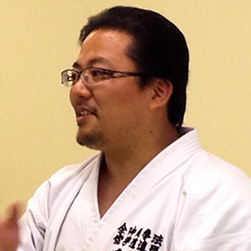
Shihan Yamashiro visits each Keiko-kai regularly, trains them, and conducts open seminars.


Shihan Yamashiro has been invited by masters of other styles, and conducted seminars regularly.


He started practicing karate when he was little with his father, Tatsuo Yamashiro, who inherited "Ti" from Hiroshi Miyazato.
He won 1st place at "All Okinawa Full Contact Fighting with Bogu Gear Tournament" in 1992 and 1993,
Written in Japanese.
Japanese fonts required to view this contents