YOLOv8 is a computer vision model architecture developed by Ultralytics, the creators of YOLOv5. You can deploy YOLOv8 models on a wide range of devices, including NVIDIA Jetson, NVIDIA GPUs, and macOS systems with Roboflow Inference, an open source Python package for running vision models.
At its core, Coffee Stain Studios' Satisfactory is more than just a survival or building game; it is a profound exploration of human ingenuity, industrial ambition, and the psychological rewards of organization. Set on a lush, alien planet, the game tasks players with a singular mission: exploit the land to fuel the "Project Assembly" for an interstellar corporation. While the premise may seem like a critique of industrial expansion, the gameplay reveals a deeply meditative loop of problem-solving and optimization.
The primary appeal of Satisfactory lies in the transition from chaos to order. The early stages of the game are defined by manual labor—hand-mining ores and carrying resources between small machines. However, as the player unlocks belts, splitters, and foundations, the game evolves into a complex logic puzzle. There is a specific kind of "digital dopamine" found in watching a perfectly timed manifold system deliver exactly sixty units of iron ore per minute to a row of smelters. When a factory reaches a state of perfect equilibrium, where no machine is idle and no resource is wasted, the player experiences the "satisfaction" promised by the title. Satisfaisant.v0.6.1.3.part1.rar
Since the filename refers to (a popular factory-building simulation game), I have written a brief essay exploring the core appeal of the game and the "Satisfactory" experience. The Architecture of Efficiency: The Allure of Satisfactory At its core, Coffee Stain Studios' Satisfactory is
Ultimately, Satisfactory taps into the universal human desire to improve our surroundings. It rewards patience, planning, and the willingness to tear down old, "spaghetti-like" layouts in favor of sleek, vertical efficiency. It proves that there is beauty in a well-oiled machine and a profound sense of peace to be found in the steady, rhythmic hum of progress. The primary appeal of Satisfactory lies in the
Furthermore, the game utilizes its first-person perspective to create a sense of scale that top-down management sims often lack. Looking up at a towering Space Elevator or standing beneath a massive network of elevated glass walkways gives the player a visceral sense of accomplishment. You aren't just clicking icons on a map; you are physically walking through the cathedral of industry you’ve constructed.
At its core, Coffee Stain Studios' Satisfactory is more than just a survival or building game; it is a profound exploration of human ingenuity, industrial ambition, and the psychological rewards of organization. Set on a lush, alien planet, the game tasks players with a singular mission: exploit the land to fuel the "Project Assembly" for an interstellar corporation. While the premise may seem like a critique of industrial expansion, the gameplay reveals a deeply meditative loop of problem-solving and optimization.
The primary appeal of Satisfactory lies in the transition from chaos to order. The early stages of the game are defined by manual labor—hand-mining ores and carrying resources between small machines. However, as the player unlocks belts, splitters, and foundations, the game evolves into a complex logic puzzle. There is a specific kind of "digital dopamine" found in watching a perfectly timed manifold system deliver exactly sixty units of iron ore per minute to a row of smelters. When a factory reaches a state of perfect equilibrium, where no machine is idle and no resource is wasted, the player experiences the "satisfaction" promised by the title.
Since the filename refers to (a popular factory-building simulation game), I have written a brief essay exploring the core appeal of the game and the "Satisfactory" experience. The Architecture of Efficiency: The Allure of Satisfactory
Ultimately, Satisfactory taps into the universal human desire to improve our surroundings. It rewards patience, planning, and the willingness to tear down old, "spaghetti-like" layouts in favor of sleek, vertical efficiency. It proves that there is beauty in a well-oiled machine and a profound sense of peace to be found in the steady, rhythmic hum of progress.
Furthermore, the game utilizes its first-person perspective to create a sense of scale that top-down management sims often lack. Looking up at a towering Space Elevator or standing beneath a massive network of elevated glass walkways gives the player a visceral sense of accomplishment. You aren't just clicking icons on a map; you are physically walking through the cathedral of industry you’ve constructed.
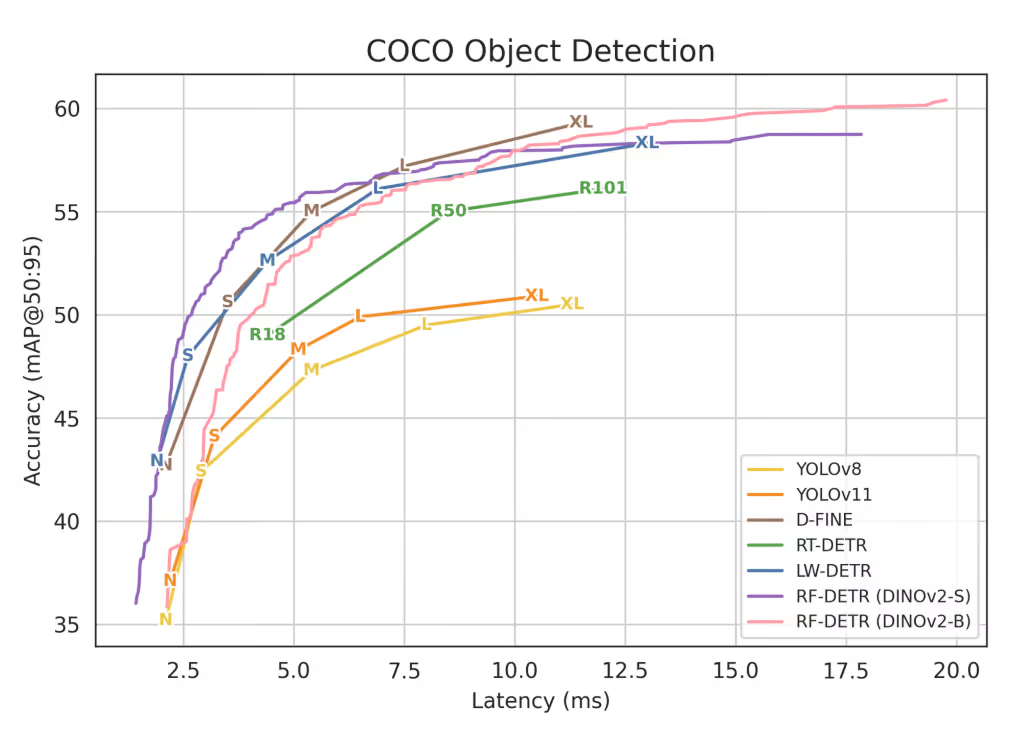
You can train a YOLOv8 model using the Ultralytics command line interface.
To train a model, install Ultralytics:
Then, use the following command to train your model:
Replace data with the name of your YOLOv8-formatted dataset. Learn more about the YOLOv8 format.
You can then test your model on images in your test dataset with the following command:
Once you have a model, you can deploy it with Roboflow.
YOLOv8 comes with both architectural and developer experience improvements.
Compared to YOLOv8's predecessor, YOLOv5, YOLOv8 comes with:
Furthermore, YOLOv8 comes with changes to improve developer experience with the model.