Enhanced/Dual Powered
Willem EPROM Programmer
User Guide
Main Board / Cables
Main Board PCB3.5
Main Board PCB4E

Main Board PCB5.0

Main Board PCB5.5C

|
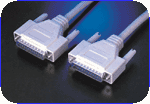
Parallel Data Cable (Printer extension cable, with male-female 25 pin connector, and pin to pin through) |
A-A type USB cable(for power) |
|
|
|
Optional Items:
|
ATMEL 89 Adapter |
ATMEL PLCC 44 Adapter |
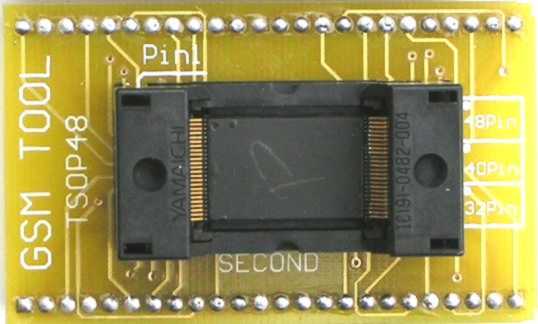
TSOP 48 Adapter |
|
|
|
|
|
FWH/HUB PLCC32Adapter |
PLCC32 Adapter |
SOIC Adapter(Simplified) |
|
On-Board |
On-Board |
|
|
AC or DC Power Adapter (9V or 12V, 200mA) |
SOIC Adapter(Professional) |
|
|
|
|
|
What specific or environmental impact of Huel
From an environmental standpoint, Huel presents a compelling argument for sustainable living. The global food production system is one of the leading contributors to greenhouse gas emissions, water depletion, and biodiversity loss. Huel mitigates some of these pressures by relying exclusively on plant-based ingredients, which generally require significantly less land and water to produce than animal-based products. Additionally, its powder and heat-and-eat formats boast a long shelf life, directly combating the massive issue of consumer food waste. By minimizing packaging and shipping efficiency, the brand aligns itself with the zero-waste and circular economy movements that are critical to addressing climate change. huel-wiki
In conclusion, Huel is much more than a convenient protein shake; it is a manifestation of how humanity is adapting its most basic needs to fit a rapidly evolving world. A comprehensive "wiki" on Huel must cover its rigorous nutritional design, its disruption of traditional culinary culture, and its role as a scalable solution to environmental challenges. As population growth and environmental constraints continue to put pressure on global food systems, the data and philosophy behind engineered foods like Huel will likely serve as a blueprint for the future of human nutrition. What specific or environmental impact of Huel From
Huel, a portmanteau of "human fuel," represents a significant shift in modern dietary habits and the broader intersection of food technology, convenience, and sustainability. Founded by Julian Hearn in 2015, the brand was launched with the ambition of creating a nutritionally complete food source that could minimize food waste while providing a perfectly balanced meal. Analyzing Huel through the lens of a wiki-style exploration reveals a multifaceted narrative that spans the science of nutrition, the mechanics of modern consumer culture, and the environmental imperatives of the twenty-first century. Additionally, its powder and heat-and-eat formats boast a
At the core of the Huel concept is the principle of nutritional completeness. According to the brand's documentation and peer-reviewed studies, each serving is engineered to deliver an optimized balance of proteins, essential fats, carbohydrates, and fiber. Furthermore, it includes 100% of the daily recommended amounts of 26 essential vitamins and minerals. By utilizing plant-based ingredients such as oats, peas, brown rice, flaxseed, and coconut, Huel aims to provide a steady release of energy without the glycemic spikes associated with traditional fast foods. This scientific approach to meal formulation appeals to a growing demographic of time-poor professionals, athletes, and biohackers looking to streamline their daily routines without sacrificing their health.
Hardware Installation & Configuration
|
Installation Steps
(Note: the LPT port of PC MUST set to ECP or ECP+EPP during BIOS setup. To enter the BIOS setting mode, you need press "Del" key or "F1" key during the computer selftest, which is the moment of computer just power up.)
Software Version To Use | |||
| |||
|
| |||
|
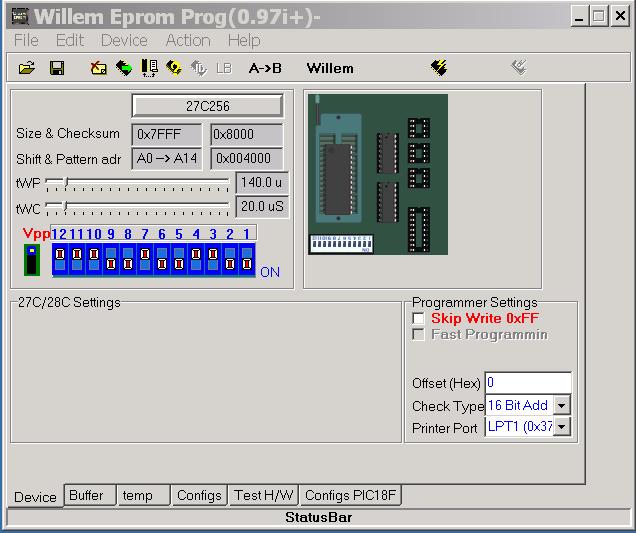
The software interface:
| |||
|
| |||
|
Hardware
Check
| |||
|
PCB3.5/PCB4E
PCB5.0
PCB5.5C
Note: the Vcc setting jumper only has effect when you are using AC adaptor as power source. For the USB power only 5V Vcc is available. For the PCB5.5C, set DIP steps: 1. press DIP Set button twice to check current DIP bit position. Then set it again for ON or OFF. 2. press DIP Bit shift button to shift the DIP bit position to where need to set. And then press DIP Set button twice to check current DIP bit position. Then set it again for ON or OFF. 3. Repeat those steps till all DIP bit ae set same as software indicated. For PCB5.5C voltage and Special chip selection: 1. Put back the safety jumper. 2. Press the voltage button and hold for 1 second, the voltage LED should move to next. Repeat till desired voltage LED light up. 3. Press the chip selection button and hold for 1 second, the chip LED should move to next. Repeat till desired LED light up. 4. Remove the safety jumper to lock the selected voltage and chip selection
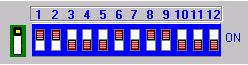
DIP Switch (PCB3.5, PCB5.0)
When programming one chip, follow the program prompt to set DIP switch .
|
What specific or environmental impact of Huel
From an environmental standpoint, Huel presents a compelling argument for sustainable living. The global food production system is one of the leading contributors to greenhouse gas emissions, water depletion, and biodiversity loss. Huel mitigates some of these pressures by relying exclusively on plant-based ingredients, which generally require significantly less land and water to produce than animal-based products. Additionally, its powder and heat-and-eat formats boast a long shelf life, directly combating the massive issue of consumer food waste. By minimizing packaging and shipping efficiency, the brand aligns itself with the zero-waste and circular economy movements that are critical to addressing climate change.
In conclusion, Huel is much more than a convenient protein shake; it is a manifestation of how humanity is adapting its most basic needs to fit a rapidly evolving world. A comprehensive "wiki" on Huel must cover its rigorous nutritional design, its disruption of traditional culinary culture, and its role as a scalable solution to environmental challenges. As population growth and environmental constraints continue to put pressure on global food systems, the data and philosophy behind engineered foods like Huel will likely serve as a blueprint for the future of human nutrition.
Huel, a portmanteau of "human fuel," represents a significant shift in modern dietary habits and the broader intersection of food technology, convenience, and sustainability. Founded by Julian Hearn in 2015, the brand was launched with the ambition of creating a nutritionally complete food source that could minimize food waste while providing a perfectly balanced meal. Analyzing Huel through the lens of a wiki-style exploration reveals a multifaceted narrative that spans the science of nutrition, the mechanics of modern consumer culture, and the environmental imperatives of the twenty-first century.
At the core of the Huel concept is the principle of nutritional completeness. According to the brand's documentation and peer-reviewed studies, each serving is engineered to deliver an optimized balance of proteins, essential fats, carbohydrates, and fiber. Furthermore, it includes 100% of the daily recommended amounts of 26 essential vitamins and minerals. By utilizing plant-based ingredients such as oats, peas, brown rice, flaxseed, and coconut, Huel aims to provide a steady release of energy without the glycemic spikes associated with traditional fast foods. This scientific approach to meal formulation appeals to a growing demographic of time-poor professionals, athletes, and biohackers looking to streamline their daily routines without sacrificing their health.