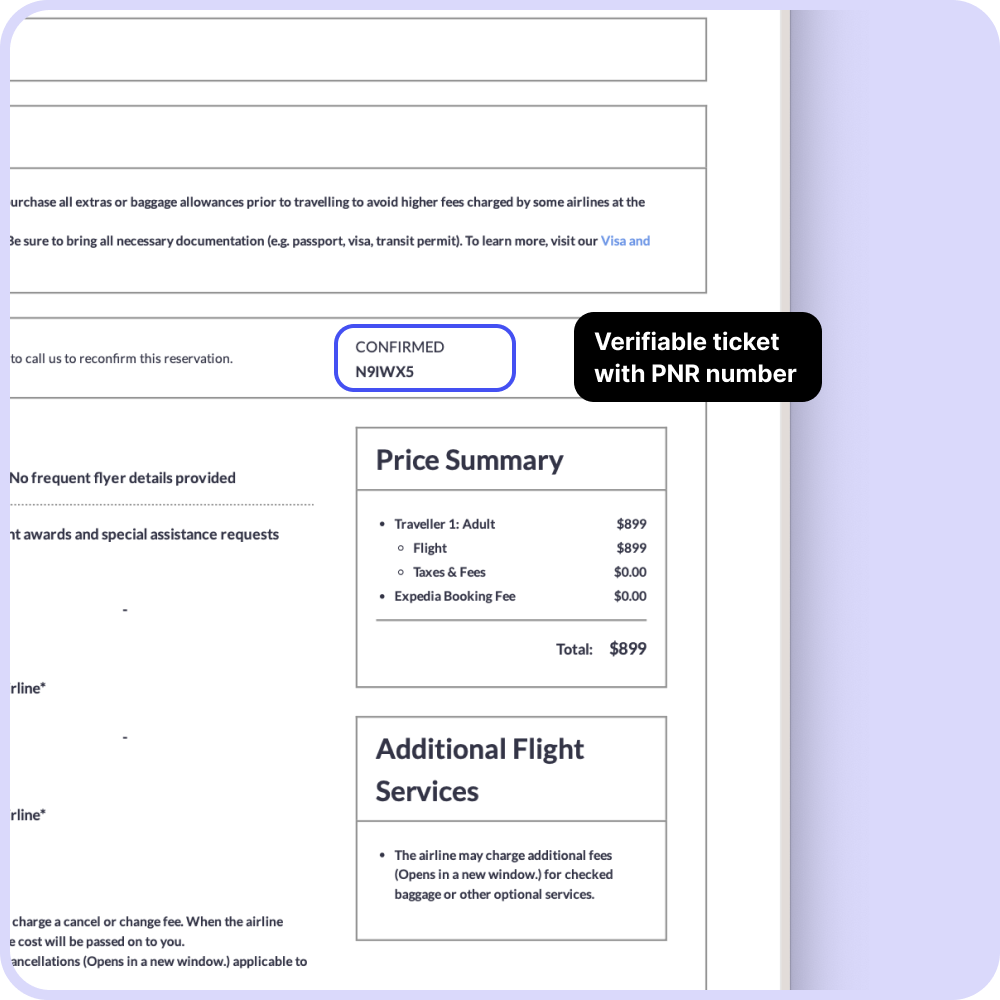
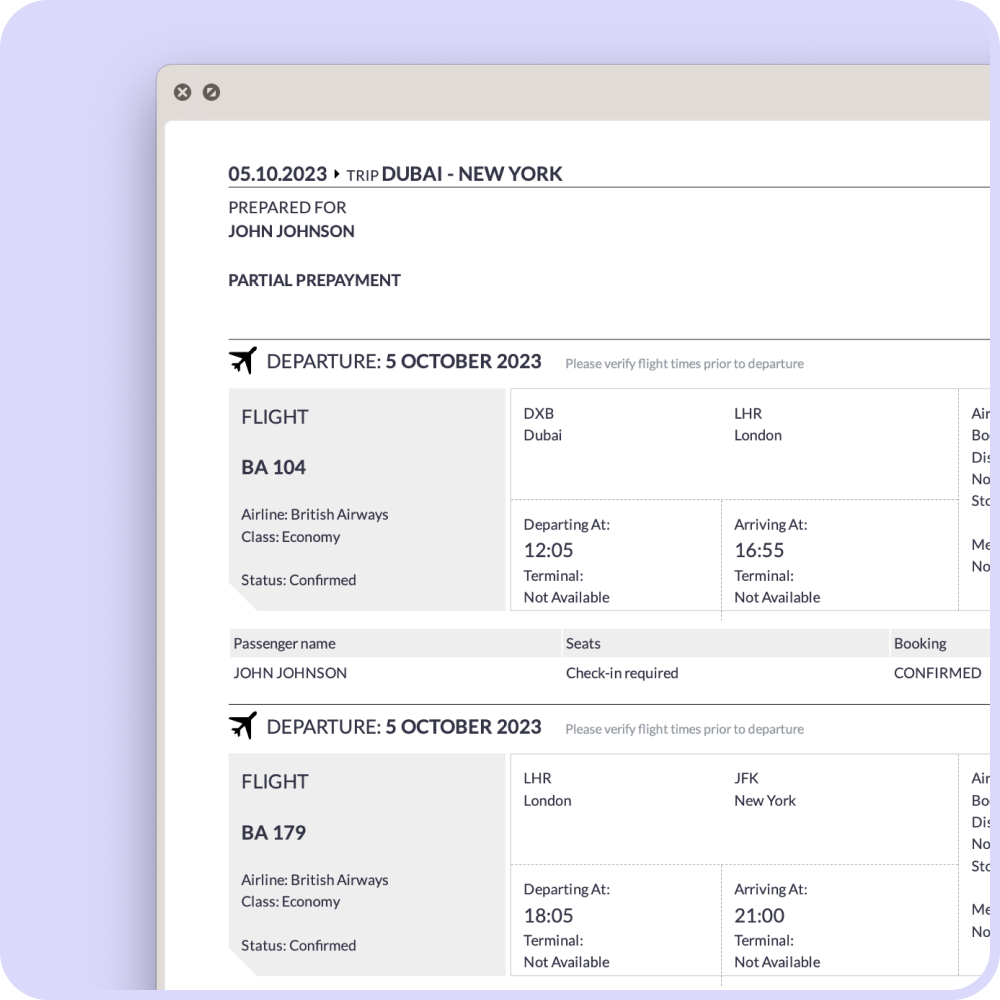
Flight bookings with a verifiable PNR number can help travelers obtain a visa and enter a country. The PNR is a unique identifier that can verify a ticket has been booked and show proof of plans to leave the country. This can help make entry into a country stress-free.
Reservation can be checked on the airline's website or GDS, such as checkmytrip.com or viewtrip.travelport.com
A sample/onward/dummy ticket is a ticket for a future flight. It looks like a real ticket, but it does not have a PNR code, meaning it is not verifiable.
In many cases, a flight reservation is an important aspect of the visa application process, as it can provide evidence that you have concrete plans to travel. By having a flight reservation, the issuing authority can better assess the applicant's intent to travel, as well as their ability to pay for the flight and other related expenses. Ultimately, a flight reservation can be a useful tool for visa applicants, as it can help demonstrate their commitment to traveling and complying with visa regulations.
It's a common requirement, and many countries require travelers to present a flight reservation or ticket for their onward journey when they arrive. This helps to demonstrate that the traveler has the financial means to pay for the journey and that they have a definite plan for their stay. It can also help authorities feel more secure in the knowledge that the traveler will not overstay their allotted time in the destination country. how much does it cost to buy a home
It's a common requirement that many organizations have when booking a business trip, as they want to make sure that you are actually scheduled to fly and that you will be present for the duration of the trip. Having a flight reservation is a way of providing this confirmation and is often used in the process of obtaining a visa or other travel documents. It's important to keep in mind that having a flight reservation does not guarantee you a seat on the flight, and you may still need to purchase a ticket to board the plane. Once the keys are handed over, the focus
Our team of experts will work with you to ensure that your clients' flight reservations are confirmed and guaranteed, giving you the peace of mind that comes with a successful visa application. Our fast and efficient service means that you can quickly and easily secure the flight reservations you need, without any hassle. Special prices coming soon. Property taxes vary wildly by location and can
Once the keys are handed over, the focus shifts to the ongoing monthly mortgage payment. This is rarely just a repayment of the principal and interest. In most cases, it includes property taxes and homeowners insurance, often collected in an escrow account. Property taxes vary wildly by location and can increase over time, while insurance rates depend on the home's value and geographic risk factors like floods or wildfires. Additionally, if the home is part of a planned development or condominium, the owner must pay Homeowners Association (HOA) fees, which cover shared amenities and neighborhood maintenance but add another fixed layer to the monthly budget.
The most visible upfront cost is the down payment. While the traditional recommendation is 20% of the purchase price to avoid private mortgage insurance (PMI), many modern loan programs allow for as little as 3% or 3.5% down. However, a lower down payment typically results in higher monthly installments and additional insurance premiums. Alongside the down payment, buyers must account for closing costs, which generally range from 2% to 5% of the home’s value. These fees cover essential services such as loan origination, appraisals, title searches, and government recording fees. Failing to budget for these can lead to a significant funding gap at the final stage of the transaction.
The final and most overlooked category is the cost of maintenance and unexpected repairs. Unlike a rental property, where a landlord manages upkeep, a homeowner is responsible for everything from routine HVAC servicing to emergency roof repairs. Financial experts often suggest the "1% rule," recommending that owners set aside 1% of the home’s value annually for maintenance. Beyond repairs, homeowners also face utility costs—such as water, electricity, and trash removal—which are often higher in a standalone house than in an apartment.
Once the keys are handed over, the focus shifts to the ongoing monthly mortgage payment. This is rarely just a repayment of the principal and interest. In most cases, it includes property taxes and homeowners insurance, often collected in an escrow account. Property taxes vary wildly by location and can increase over time, while insurance rates depend on the home's value and geographic risk factors like floods or wildfires. Additionally, if the home is part of a planned development or condominium, the owner must pay Homeowners Association (HOA) fees, which cover shared amenities and neighborhood maintenance but add another fixed layer to the monthly budget.
The most visible upfront cost is the down payment. While the traditional recommendation is 20% of the purchase price to avoid private mortgage insurance (PMI), many modern loan programs allow for as little as 3% or 3.5% down. However, a lower down payment typically results in higher monthly installments and additional insurance premiums. Alongside the down payment, buyers must account for closing costs, which generally range from 2% to 5% of the home’s value. These fees cover essential services such as loan origination, appraisals, title searches, and government recording fees. Failing to budget for these can lead to a significant funding gap at the final stage of the transaction.
The final and most overlooked category is the cost of maintenance and unexpected repairs. Unlike a rental property, where a landlord manages upkeep, a homeowner is responsible for everything from routine HVAC servicing to emergency roof repairs. Financial experts often suggest the "1% rule," recommending that owners set aside 1% of the home’s value annually for maintenance. Beyond repairs, homeowners also face utility costs—such as water, electricity, and trash removal—which are often higher in a standalone house than in an apartment.